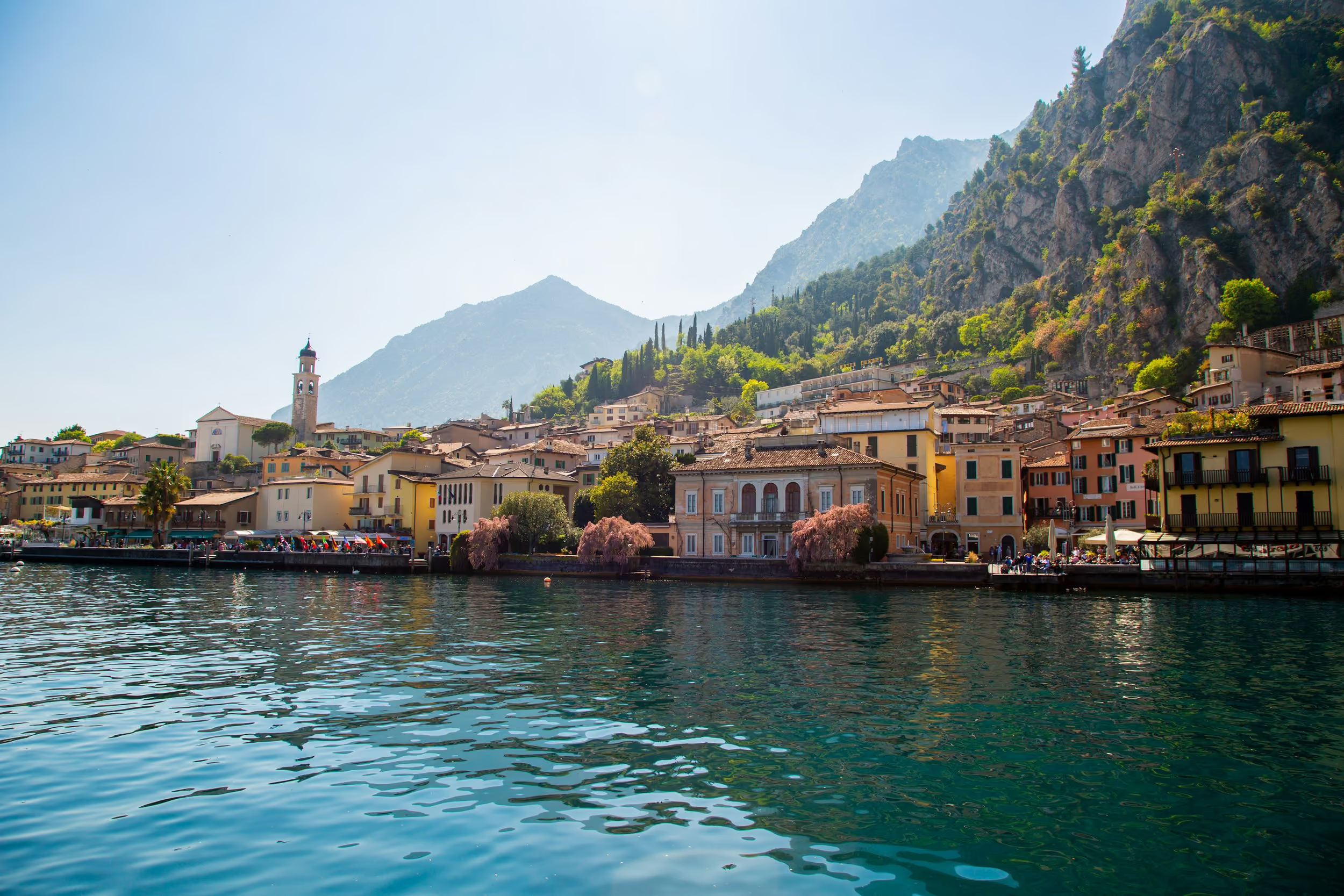
Hiking Around Lake Garda: Discover the Most Beautiful Walks and Mountain Trails
Lake Garda is probably best known for its picturesque lakeside towns, beautiful beaches, waterfront restaurants and spectacular scenery. But there’s another side to the lake that many visitors never get to experience, and that’s the incredible network of walking and hiking trails hidden among the surrounding hills and mountains. You don’t have to travel far from the busy waterfronts to find yourself surrounded by olive groves, woodland, mountain pastures and some truly breathtaking views.
What makes walking around Lake Garda particularly enjoyable is the sheer variety of landscapes. The southern end of the lake is characterised by gentle hills, vineyards and peaceful countryside, while further north the scenery becomes increasingly dramatic, with towering mountains, steep cliffs and deep valleys. There are walks suitable for almost everyone. Some are little more than a pleasant stroll through the countryside, while others involve several hours of climbing to reach remote mountain summits. Whether you’re visiting for a few days or spending several weeks exploring the area, it’s well worth making time to discover some of these wonderful trails.
1. The Ponale Trail – Riva del Garda

If you’ve ever visited Riva del Garda and looked towards the mountains on the western side of the lake, you may have noticed a narrow pathway winding its way along the cliffs. This is the famous Ponale Trail, and it’s undoubtedly one of the most impressive walks anywhere around Lake Garda. The path follows the route of an old road that was originally built during the 19th century to connect Riva del Garda with the Ledro Valley. Today, the road is no longer used by ordinary motor traffic and has become a favourite with walkers and cyclists.
Starting just outside the centre of Riva del Garda, the route gradually climbs above the lake, passing through a series of tunnels cut directly into the rock. The higher you walk, the better the views become. Looking back towards Riva, you’ll see the colourful buildings clustered along the waterfront, with Torbole visible across the water and the mountains rising steeply behind both towns.
It’s one of those walks where you’ll probably find yourself stopping every few minutes to take another photograph. You don’t necessarily have to complete the entire route to appreciate it. Even walking the first couple of kilometres provides some fantastic views.
Those wanting a longer outing can continue towards Pregasina or explore routes leading into the Ledro Valley. Allow around three hours for a substantial walk, although the time and distance depend on how far you decide to go. One thing worth remembering is that the trail is also popular with cyclists, so it’s important to be aware of bikes approaching around bends and through the tunnels.
2. Busatte–Tempesta – Torbole


The Busatte–Tempesta trail is another walk that deserves a place on your Lake Garda itinerary, particularly if you enjoy unusual routes and impressive scenery. Beginning above Torbole at Parco delle Busatte, the path follows the mountainside along the eastern shore of the northern lake. For much of the walk, you’ll be surrounded by woodland and Mediterranean vegetation, with wonderful views appearing through gaps in the trees.
What makes this route particularly memorable, however, is the series of metal staircases built into the mountainside. There are more than 400 steps altogether, allowing walkers to cross sections of steep rocky terrain while enjoying spectacular views across the water. Although the staircases might look a little intimidating in photographs, the route is generally considered manageable for reasonably fit walkers.
That said, if you’re particularly uncomfortable with heights, you might find some sections less enjoyable. The complete circuit is approximately 8 kilometres and usually takes around two and a half to three hours. It’s a lovely walk on a clear day, especially when the sunlight catches the water below. Before setting off, it’s worth checking whether the entire route is open, as sections have occasionally been closed for maintenance.
3. Monte Baldo – Malcesine

Monte Baldo is one of Lake Garda’s most recognisable natural landmarks, rising dramatically above the eastern shoreline. The mountain range stretches for many kilometres and reaches heights of more than 2,200 metres. It’s also one of the best places in the region for hiking, offering everything from relatively easy mountain walks to challenging routes across exposed ridges.
For visitors staying in Malcesine, the cable car provides a convenient way to reach the upper slopes without having to climb the mountain from lake level. The journey itself is an experience, with increasingly impressive views as you rise above the town. Once at the top, you’ll find a network of paths crossing grassy slopes, alpine meadows and rocky mountain terrain.
On a clear day, the views are extraordinary. Looking south, Lake Garda stretches into the distance, while to the north you’ll see mountain ranges extending towards the Alps. Monte Baldo is also famous for its rich variety of plants and flowers, earning it the nickname the Garden of Europe.
During late spring and early summer, many of the mountain meadows are covered in colourful wildflowers. For anyone wanting a gentle introduction to mountain walking, there are shorter routes around the upper cable car station. More experienced hikers can venture further along the ridges or tackle demanding routes towards peaks such as Cima Valdritta.
Another way to explore the mountain is from the Prada side, where a separate lift system provides access to walking routes on the western slopes. It’s important not to underestimate the mountain environment. Even when the weather is warm and sunny beside the lake, conditions at higher altitudes can be surprisingly cold and windy. If you’re planning a longer hike, proper walking boots, warm clothing and a reliable map are essential.
4. Punta Larici – Pregasina

There are plenty of beautiful viewpoints around Lake Garda, but Punta Larici is certainly among the most impressive. Situated above the northwestern shore near the small village of Pregasina, this rocky viewpoint offers an almost uninterrupted panorama across the lake. The walk begins near the village and follows paths climbing through woodland before reaching more open sections of mountainside.
As you approach Punta Larici, the scenery becomes increasingly dramatic. The lake lies hundreds of metres below, stretching southwards between the mountains. It’s a wonderful place for photography, particularly during the morning when the light illuminates the surrounding landscape.
The standard route is relatively short at approximately 3.2 kilometres, but there is a considerable amount of climbing involved. Allow around one hour and 45 minutes, depending on your pace. Although it’s not an especially long hike, there are steep sections and exposed drops near the viewpoint, so care is needed. For those comfortable with mountain paths, the reward is one of the finest views anywhere around Lake Garda.
5. Monte Brione – Between Riva del Garda and Torbole

Standing between Riva del Garda and Torbole is Monte Brione, a distinctive hill that rises above the northern shore. Compared with the much higher mountains surrounding the lake, Monte Brione might appear relatively modest, but it’s a surprisingly rewarding place to explore. The hill forms part of a protected natural area, with walking paths passing through olive groves, woodland and open sections overlooking the water.
It’s also an interesting destination for anyone who enjoys history. During the period when this part of northern Italy belonged to the Austro-Hungarian Empire, Monte Brione formed an important part of the area’s military defences. Several old fortifications can still be seen along the walking routes.
As you climb, there are excellent views towards Riva del Garda, Torbole and the Sarca Valley. The main walking circuit is approximately 6 kilometres and takes around three hours. With its mixture of natural scenery, historical remains and panoramic viewpoints, Monte Brione is a good choice for visitors who want something a little different from the usual lakeside walk.
6. Rocca di Garda – Garda and Bardolino

If you’re staying around Garda or Bardolino and fancy a walk away from the waterfront, the Rocca di Garda is an excellent option. This distinctive flat-topped hill rises between the two towns and provides wonderful views over the southern part of the lake. There are several paths leading towards the top, including routes starting from Garda and Bardolino.
The walk takes you through woodland and olive groves, with the occasional opening in the trees revealing glimpses of the lake below. As you climb higher, the scenery becomes increasingly impressive. From the upper viewpoints, you can see the shoreline curving around Garda, the surrounding hills and the distant mountains.
It’s particularly beautiful in the morning or towards the end of the afternoon when the light is softer. Although the Rocca isn’t especially high, some sections of the path are steep and rocky, so sensible footwear is advisable. Depending on your starting point and chosen route, allow approximately one and a half to two and a half hours. It’s a lovely way to spend a morning before heading back into Garda or Bardolino for lunch.
7. Lake Tenno and Canale di Tenno


Not every enjoyable walk around Lake Garda involves climbing a mountain. A short drive inland from Riva del Garda brings you to Lake Tenno, a small lake famous for its remarkable turquoise water. The colour can be quite extraordinary, particularly on a sunny day.
Surrounded by woodland and mountains, Lake Tenno feels wonderfully peaceful compared with the busier shores of Lake Garda. One of the nicest walks in the area combines the lake with the nearby medieval village of Canale di Tenno. The route passes through attractive countryside before reaching the village, where narrow cobbled streets, stone archways and old houses create an atmosphere that seems almost unchanged by time.
Canale di Tenno is a lovely place to wander around, and it’s worth allowing a little extra time to explore. The walk between the lake and village is approximately 4.5 kilometres and generally takes around an hour and a half. With relatively little climbing involved, it’s a good choice for families or anyone looking for a more relaxed outing. During warmer weather, you could also combine the walk with some time beside the lake.
8. Monte Altissimo di Nago


For anyone looking for a more challenging mountain walk, Monte Altissimo di Nago is well worth considering. Situated at the northern end of the Monte Baldo range, the mountain reaches approximately 2,078 metres above sea level. It’s a popular destination with experienced walkers, partly because of the magnificent views from the summit.
One of the usual approaches begins around Prati di Nago, where paths climb through mountain pastures and rocky terrain. The landscape becomes increasingly alpine as you gain height, with wide open slopes and impressive views across the surrounding mountains. There are also reminders of the area’s military past, including remains associated with the First World War.
Near the summit stands Rifugio Damiano Chiesa, a mountain refuge where walkers may be able to stop for refreshments when it’s open. The views from the summit are exceptional, particularly towards the northern end of Lake Garda. The main route from the Prati di Nago area is approximately 8.6 kilometres, with around 760 metres of ascent.
Allow about four hours for the walk, although weather conditions and individual fitness will make a difference. This is a proper mountain hike rather than a casual countryside stroll, so preparation is important.
9. Rocca di Manerba – Manerba del Garda

The Rocca di Manerba is one of the most attractive natural areas on the southwestern side of Lake Garda. Rising above the shoreline near Manerba del Garda, this rocky promontory forms part of a protected nature reserve. The area is crossed by several walking paths, allowing visitors to explore woodland, open grassland, archaeological remains and some beautiful viewpoints.
The scenery is particularly impressive from the higher ground, where you’ll enjoy extensive views across the southern lake. You can also look towards the surrounding bays, islands and distant mountains. During spring, the countryside is especially attractive, with wildflowers appearing across the hillsides.
It’s a lovely area for birdwatching and enjoying the natural environment. Depending on the route you choose, you could spend anything from an hour to several hours exploring. Some paths are relatively gentle, while others involve steep or uneven sections. The Rocca di Manerba is an excellent option for visitors staying around Manerba, Moniga, San Felice del Benaco or the southern part of the lake.
10. Monte Pizzocolo – Above Toscolano-Maderno

Monte Pizzocolo is one of the most impressive mountains overlooking Lake Garda’s western shore. Rising to approximately 1,581 metres, it dominates the landscape above Toscolano-Maderno. Although perhaps less familiar to international visitors than Monte Baldo, it’s a wonderful destination for experienced hikers.
Several routes lead towards the summit, passing through woodland, mountain pastures and increasingly open terrain. The climb can be demanding, but the views make the effort worthwhile. From the top, there are extensive panoramas across Lake Garda, with Monte Baldo rising on the opposite shore.
On particularly clear days, it’s possible to see well beyond the lake towards the surrounding mountain ranges. One of the attractions of Monte Pizzocolo is that it can feel considerably quieter than some of the more famous hiking destinations. It’s a good choice if you enjoy spending time in the mountains away from the busiest tourist areas. However, the various routes differ considerably in length and difficulty, so it’s important to choose one that matches your experience and fitness.
11. Monte Stivo – Near Arco

Monte Stivo is another excellent mountain destination in the northern Lake Garda region. Located near Arco, the mountain offers spectacular views across the surrounding valleys and towards the lake. A popular route begins around Passo Santa Barbara, climbing through woodland and open mountain pastures.
As you gain height, the views gradually open up. Near the summit stands Rifugio Prospero Marchetti, a traditional mountain refuge that’s a popular destination for walkers. From the refuge, it’s a relatively short climb to the summit.
The panorama is outstanding, with Lake Garda visible to the south and the Brenta Dolomites rising in the distance. The standard hiking route is approximately 9.7 kilometres, involving around 850 metres of ascent. Allow roughly four hours, although you’ll probably want additional time to enjoy the scenery. It’s a rewarding mountain walk for anyone with reasonable fitness and some experience of hiking at altitude.
12. Walking Around Tremosine

The Tremosine area is one of the most fascinating parts of Lake Garda, particularly for visitors who enjoy exploring quieter villages and rural landscapes. Situated high above the western shoreline, the Tremosine plateau is made up of small settlements, woodland, mountain pastures and spectacular cliffs. One of the best-known villages is Pieve di Tremosine, famous for its dramatic position overlooking the lake.
The surrounding countryside offers numerous walking opportunities. Some paths connect traditional villages, while others lead through forests or climb towards the surrounding mountains. The scenery is very different from the busy waterfront towns below.
Here, you’ll find quiet country lanes, old stone houses and wonderful views across the lake. The famous Terrazza del Brivido is also located in Pieve, offering a particularly dramatic perspective over the water. Walking around Tremosine is a lovely way to experience a more traditional and peaceful side of Lake Garda. Because the terrain varies considerably, it’s worth choosing a specific marked route before setting off.
13. Other Walks Worth Exploring
While the better-known trails attract plenty of attention, there are many other beautiful places to walk around Lake Garda. Arco Castle: A relatively short walk from the historic centre of Arco takes you towards the impressive castle overlooking the town. The route is approximately 2.9 kilometres and usually takes around an hour. It’s an enjoyable combination of history, scenery and a little exercise.
Lake Ledro: Situated in the mountains west of Riva del Garda, Lake Ledro is surrounded by beautiful countryside. The circular walk around the lake covers approximately 9.5 kilometres and takes around two and a half hours. It’s a particularly good choice for anyone who enjoys walking beside the water.
Gorg d’Abiss Waterfall: Near Tiarno di Sotto in the Ledro Valley, a short woodland walk leads to a beautiful waterfall hidden among the rocks. The route is approximately 2.9 kilometres and takes around an hour.
Marocche di Dro: This unusual nature reserve north of Lake Garda is famous for its enormous ancient rockslide formations. Walking through the area feels quite different from anywhere else around the lake. The marked route is approximately 6.1 kilometres and takes around two hours. These are all excellent alternatives if you’ve already explored some of the more famous trails.
14. Multi-Day Hiking Adventures Around Lake Garda
For those who enjoy a more adventurous walking holiday, Lake Garda has plenty to offer beyond individual day hikes. The mountains surrounding the northern end of the lake are crossed by an extensive network of paths, many of which have been used for generations by local communities, farmers and mountain travellers. Today, these routes provide an opportunity to spend several days exploring the region on foot, travelling between small villages, mountain refuges and some truly spectacular scenery. One of the best-known long-distance hiking networks is GardaTrek, which offers three main circuits of varying difficulty.
GardaTrek Low Loop
The Low Loop covers approximately 33 kilometres over two stages and is the most accessible of the three routes. It takes walkers through the lower hills and countryside around northern Lake Garda, combining woodland paths, rural landscapes and attractive villages. Although it’s the easiest of the three circuits, a reasonable level of fitness is still needed, particularly if you’re not accustomed to walking long distances. It’s an excellent introduction to multi-day hiking for anyone wanting to experience more of the countryside away from the busy lakefront.
GardaTrek Medium Loop
For walkers looking for something more demanding, the Medium Loop covers approximately 73 kilometres over four stages. The route ventures further into the surrounding mountains, offering a mixture of valleys, forests, elevated paths and wonderful panoramic viewpoints. There are opportunities to stay in mountain accommodation along the way, making it possible to experience several days of walking without returning to the lakeside each evening. It’s particularly appealing to regular hikers who enjoy covering longer distances and discovering quieter parts of the region.
GardaTrek Top Loop
The Top Loop is the most challenging of the three circuits and is designed for experienced mountain walkers. Covering approximately 90 to 93 kilometres over seven stages, the route passes through rugged alpine terrain, remote mountain valleys and high-altitude landscapes. The views are spectacular, but the walking can be demanding, with considerable changes in elevation and sections requiring confidence on mountain paths.
Anyone planning to tackle the Top Loop should have suitable equipment, good mountain experience and a clear understanding of the route. Accommodation should also be arranged in advance, particularly during the busier summer months. For those who enjoy a genuine mountain adventure, however, it’s a wonderful way to experience a side of Lake Garda that relatively few visitors get to see.
15. When Is the Best Time to Go Hiking Around Lake Garda?
One of the things that makes Lake Garda such a wonderful destination for walking is that there are opportunities to get outdoors throughout much of the year. However, the conditions can vary enormously depending on the season and, perhaps more importantly, the altitude. A walk through the olive groves around Bardolino is a very different experience from climbing a mountain more than 2,000 metres above sea level.
Spring – March to May
Spring is one of the loveliest times to explore the countryside around Lake Garda. As the temperatures begin to rise, the hillsides become greener, flowers start appearing and the surrounding villages gradually come back to life after the quieter winter months. It’s a particularly good time for walking around Garda, Bardolino, Manerba and the lower hills near Riva del Garda.
The weather is often comfortable for longer walks, although occasional rain is always possible. Higher mountain trails may still be affected by snow, particularly during March and April.
Summer – June to August
Summer brings long days, warm weather and generally better access to the higher mountains. It’s a wonderful time to explore places such as Monte Baldo, Monte Altissimo and Monte Stivo, provided conditions are suitable. However, temperatures around the lake can become extremely hot during July and August.
If you’re planning to walk at lower altitudes, it’s usually best to set off early in the morning before the strongest heat of the day. Carry plenty of water and remember that exposed mountain paths may offer very little shade. Summer is also the busiest tourist season, so some of the more popular trails can become crowded.
Autumn – September to October
Autumn is another excellent time to explore Lake Garda on foot. September often brings pleasantly warm days, while October can be particularly beautiful as the colours begin to change across the surrounding hills and forests. There are usually fewer visitors than during the height of summer, making it a lovely time to enjoy some of the quieter walking routes.
The vineyards around Bardolino and the countryside surrounding the lake are especially attractive at this time of year. As autumn progresses, however, daylight hours become shorter and conditions in the higher mountains can change quickly.
Winter – November to February
Although winter isn’t generally considered the main hiking season, there are still opportunities to enjoy some of Lake Garda’s lower-level walking routes. On clear days, paths around Garda, Bardolino, Manerba and other lakeside areas can be particularly pleasant. The atmosphere is completely different from summer, with quieter villages and far fewer people on the trails.
However, higher mountain routes may be covered in snow or ice and should only be attempted with the appropriate experience and equipment. For most visitors, May, June, September and early October offer the best combination of comfortable temperatures, beautiful scenery and suitable walking conditions.
16. Choosing the Right Hiking Trail
With so many wonderful walking routes around Lake Garda, deciding where to start can be surprisingly difficult. The best choice really depends on how far you want to walk, how comfortable you are with climbing and what sort of scenery you’d most like to experience. If you’re visiting Lake Garda for the first time and want a walk with spectacular views, the Ponale Trail near Riva del Garda is difficult to beat.
For something a little different, the Busatte–Tempesta trail offers the unusual experience of walking along metal staircases attached to the mountainside. If you’re staying around Garda or Bardolino, the Rocca di Garda is a lovely option that doesn’t require travelling far from the lakeside. Families and those who prefer gentler countryside walks might particularly enjoy Lake Tenno and Canale di Tenno, where beautiful scenery can be combined with a visit to one of the region’s most charming medieval villages.
For photographers, Punta Larici is an outstanding destination, although the steep drops mean it’s not suitable for everyone. Anyone interested in local history should consider Monte Brione, where old military fortifications can be explored alongside beautiful views over Riva del Garda and Torbole. If you’re looking for a genuine mountain experience, Monte Baldo offers a wide variety of possibilities, from relatively easy walks near the cable car station to much more demanding ridge routes.
More experienced hikers might prefer Monte Altissimo, Monte Stivo or Monte Pizzocolo, all of which provide rewarding climbs and magnificent views. And for visitors who simply enjoy discovering quieter places, the countryside around Tremosine offers an appealing mixture of traditional villages, woodland and mountain scenery. Whatever route you choose, it’s worth remembering that distance alone doesn’t determine how difficult a walk will be.
A relatively short trail with a steep ascent can be considerably harder than a longer walk on fairly level ground. Always check the elevation gain, terrain and current conditions before setting off.
17. A Few Things Worth Remembering Before You Set Off
Hiking around Lake Garda can be a wonderful experience, but it’s important to be properly prepared. Even some of the shorter routes involve uneven surfaces, loose stones or steep sections, so comfortable walking shoes with good grip are essential. For mountain walks, proper hiking boots are advisable.
Always carry enough water, particularly during the warmer months. Some routes have very few opportunities to buy refreshments or refill bottles. It’s also worth checking the weather forecast before leaving.
Conditions can change surprisingly quickly in the mountains, and a warm, sunny morning beside the lake doesn’t necessarily mean the weather will be the same at higher altitudes. For longer hikes, download a reliable route map and make sure your phone is sufficiently charged. Remember that some paths may occasionally be closed because of maintenance, rockfalls or adverse weather.
If you’re planning to visit a mountain refuge or use a cable car, check opening times beforehand, as services can be seasonal. The emergency telephone number in Italy is 112.
Discovering a Different Side of Lake Garda
There’s something particularly enjoyable about exploring Lake Garda on foot. Of course, the lakeside towns are beautiful, and there’s nothing quite like sitting beside the water enjoying a coffee or a leisurely lunch. But heading into the surrounding hills and mountains gives you a completely different perspective on the area.
You might find yourself walking through olive groves, following an old military path high above the water or wandering through a tiny village where life seems to move at a slower pace. And sometimes, after a little climbing, you’ll arrive at a viewpoint that makes you realise just how extraordinary the landscape around Lake Garda really is. The wonderful thing is that you don’t have to be an experienced hiker to enjoy it.
There are walks for almost every ability, from gentle countryside routes to challenging mountain adventures. So next time you’re visiting Lake Garda, why not set aside a morning or afternoon to explore somewhere new? Pack a comfortable pair of walking shoes, take some water and venture a little further than the waterfront. You might just discover a part of Lake Garda that becomes one of your favourite memories of the trip.