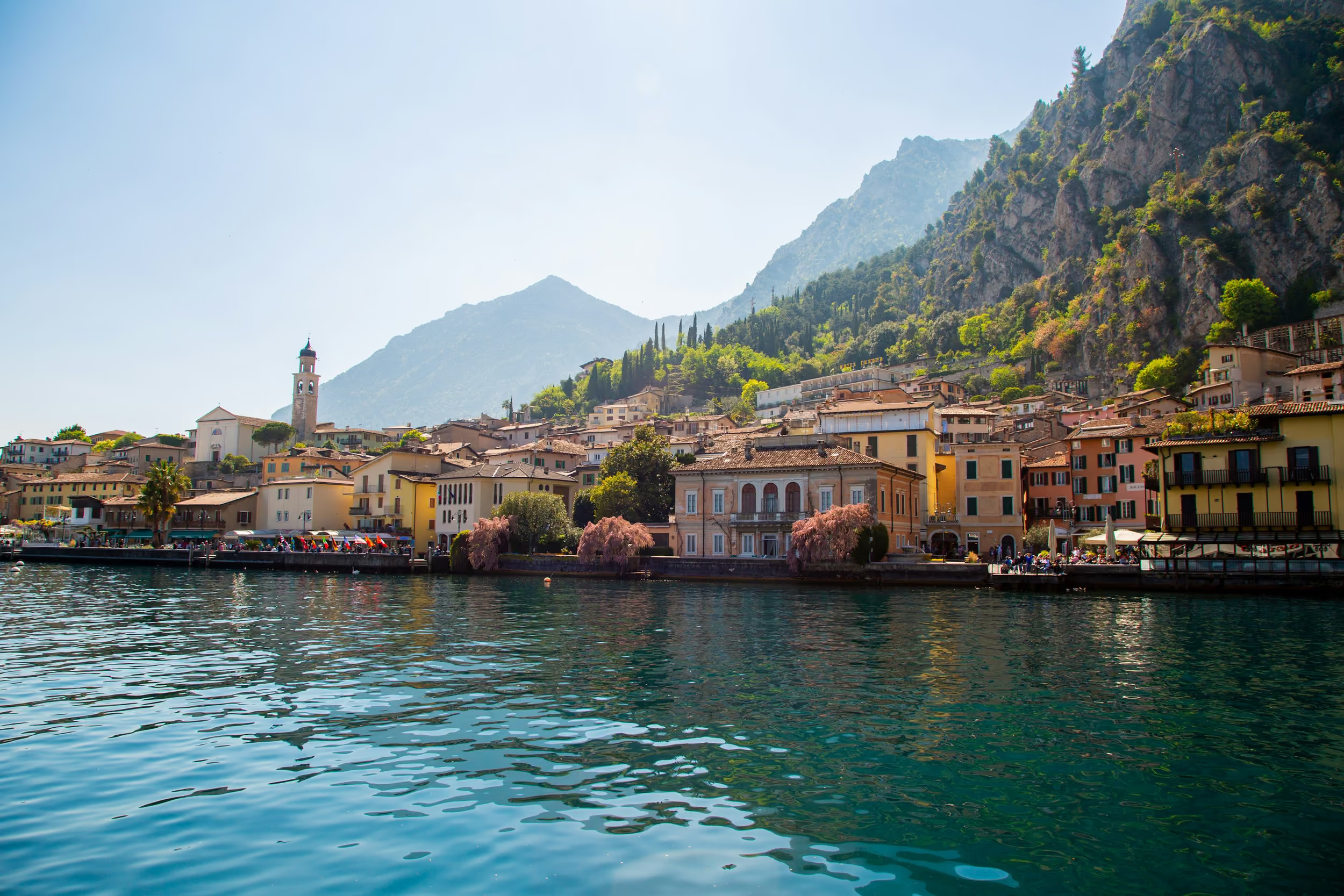
Monte Baldo – Discover the Mountains Above Lake Garda
Breathtaking views, alpine meadows, traditional mountain villages and a completely different side of Lake Garda.
When people think of Lake Garda, they usually picture colourful lakeside towns, beautiful harbours, waterfront restaurants and long summer days beside the water. But look up from the eastern shore and you’ll notice something equally impressive dominating the skyline.
Monte Baldo.
This magnificent mountain range rises dramatically above Lake Garda, offering some of the most spectacular scenery in northern Italy. It’s a place where you can leave the busy lakeside promenades behind and, within a relatively short time, find yourself surrounded by alpine meadows, rocky mountain peaks and breathtaking panoramic views.
And while Monte Baldo is a favourite destination for experienced hikers and outdoor enthusiasts, you certainly don’t have to be particularly adventurous to enjoy it. You can take the famous rotating cable car from Malcesine, explore the quieter southern slopes around Prada, enjoy lunch at a traditional mountain refuge or simply spend a few hours admiring the extraordinary scenery.
For anyone visiting Lake Garda, Monte Baldo offers something rather special. It’s an opportunity to see the lake from an entirely different perspective and discover a side of the region that many holidaymakers never experience.
Where Is Monte Baldo?
One thing that surprises some visitors is that Monte Baldo isn’t actually a single mountain.
It’s an extensive mountain range stretching for approximately 40 kilometres along the eastern side of Lake Garda, between the lake and the Adige Valley. The mountain range crosses parts of the provinces of Verona and Trento, with its highest summit, Cima Valdritta, reaching an impressive 2,218 metres above sea level. Other prominent peaks include Punta Telegrafo, Cima delle Pozzette and Cima del Longino.
From towns such as Malcesine and Brenzone, the mountains rise steeply from the shoreline, creating the dramatic landscape that makes the eastern side of Lake Garda so distinctive. What makes Monte Baldo particularly interesting is how much the scenery changes as you climb. At lower elevations, you’ll find olive groves, woodland and vegetation influenced by Lake Garda’s relatively mild Mediterranean climate.
Higher up, these gradually give way to beech forests, open mountain pastures and alpine vegetation. Eventually, the landscape becomes much more rugged, with rocky ridges and exposed summits. It’s quite remarkable that so many different environments exist within such a relatively small area.
The Famous Monte Baldo Cable Car from Malcesine
For most visitors, the easiest way to experience Monte Baldo is by taking the famous cable car from Malcesine.
The Funivia Malcesine–Monte Baldo is one of Lake Garda’s best-known attractions, and the journey itself is every bit as memorable as the destination.
The cable car operates in two sections.
The first takes passengers from Malcesine, close to lake level, up to the intermediate station at San Michele, approximately 580 metres above sea level. Here, you change cabins for the second section, which continues up to Tratto Spino at approximately 1,760 metres. And this is where things become particularly interesting. Unlike an ordinary cable car, the large panoramic cabins on the upper section slowly rotate through 360 degrees during the ascent.
This means passengers can enjoy changing views in every direction without having to move around the cabin. As you climb, the rooftops of Malcesine become smaller and smaller, while Lake Garda opens up beneath you. The deep blue water stretches into the distance, surrounded by mountains, villages and winding roads that suddenly look tiny from above. It’s a wonderful experience, particularly if you’re visiting the lake for the first time.
What Happens When You Reach the Top?

Once you arrive at Tratto Spino, you’ll find yourself in a completely different environment from the one you left behind in Malcesine.
The air is cooler, the landscape is more open and the views can be extraordinary. There are places to stop and admire the scenery, walking trails leading across the mountain and facilities where you can enjoy refreshments. You don’t have to undertake a long hike to appreciate the surroundings. Simply spending time around the upper station and nearby viewpoints can be a thoroughly enjoyable experience.
On a clear day, you may be able to see much of Lake Garda, the surrounding mountain ranges and distant peaks stretching towards the Alps. However, it’s worth remembering that mountain weather can change quickly. Sometimes the lake below is enjoying glorious sunshine while the upper slopes are hidden beneath cloud. For this reason, checking the weather forecast and mountain webcams before travelling is always sensible.
Avoiding the Cable Car Queues
The Malcesine cable car is extremely popular, particularly during July and August.
On busy summer days, queues can become quite long, especially from late morning onwards. If possible, aim to arrive early and check whether tickets can be purchased online in advance. It’s also worth allowing plenty of time for your return journey, particularly if you have other plans later in the day.
One final tip: don’t assume the temperature at the top will be anything like the temperature in Malcesine. Even during the height of summer, it can feel surprisingly cool at 1,760 metres, especially when the wind picks up.
The Quieter Alternative – Prada–Costabella
Although the Malcesine cable car receives most of the attention, there’s another way to explore Monte Baldo that many visitors overlook.
The Prada–Costabella lift system is situated on the southern side of the mountain, above San Zeno di Montagna. And if you prefer somewhere a little quieter, it’s well worth considering. Unlike the large rotating cable cars at Malcesine, the Prada route uses smaller two-person lifts. The first section begins at Prada, approximately 1,000 metres above sea level, and travels up to Ortigaretta at around 1,550 metres.
From here, a chairlift continues to Costabella, reaching approximately 1,850 metres. The journey offers beautiful views of the surrounding countryside and the southern part of Lake Garda. There’s something particularly enjoyable about travelling through the mountain landscape in a small lift, with the fresh air and scenery all around you.
What Makes Prada Different?
The Prada side of Monte Baldo generally feels less busy and more peaceful than the main tourist area above Malcesine.
It’s a lovely choice for visitors who enjoy walking, photography and traditional mountain scenery. There are several mountain refuges in the area, along with walking routes of varying difficulty. The landscape is characterised by open pastures, wooded slopes and impressive views towards Lake Garda. It’s also a good area for experiencing the mountain’s natural environment away from the busiest viewpoints.
One important thing to understand is that the Prada and Malcesine lifts serve different sections of Monte Baldo. They don’t simply provide alternative routes to the same summit. Although experienced hikers can explore routes between different parts of the mountain, this isn’t something casual visitors should attempt without proper planning. If you have time during your holiday, visiting both areas on separate days can be a wonderful way to appreciate how varied Monte Baldo really is.
Walking and Hiking on Monte Baldo

Monte Baldo is a paradise for anyone who enjoys walking.
The mountain has an extensive network of paths, ranging from relatively short scenic walks to demanding routes across high ridges and mountain summits. One of the great pleasures of walking here is the constantly changing scenery. You might begin your walk surrounded by green pastures and grazing cattle, before reaching a rocky viewpoint overlooking Lake Garda.
In other areas, paths wind through woodland or follow open mountain slopes with uninterrupted views towards the Alps. The choice of walks is enormous, but it’s important to select one that suits your experience and fitness.
Gentle Walks and Scenic Viewpoints
If you’re mainly interested in enjoying the views, the area around the upper Malcesine cable car station is a good starting point.
There are places where you can admire the scenery without committing to a lengthy hike. However, even paths close to the cable car can be rocky, uneven or steep. Comfortable walking shoes with good grip are strongly recommended. It’s also worth remembering that mountain paths aren’t necessarily suitable for pushchairs or visitors with limited mobility.
Cima delle Pozzette
For walkers looking for something more adventurous, Cima delle Pozzette is one of the better-known peaks accessible from the Tratto Spino area.
At over 2,100 metres, it offers magnificent views across the mountain range and Lake Garda. The route involves a substantial climb and uneven mountain terrain, so it’s best suited to people with suitable footwear and a reasonable level of fitness. On clear days, the views are spectacular, but conditions can change quickly. Always check the forecast and allow sufficient time for your return.
Cima Valdritta – The Highest Peak
Cima Valdritta is the highest summit in the Monte Baldo range, reaching 2,218 metres.
For experienced hikers, reaching the summit can be a particularly rewarding experience. The surrounding landscape is rugged and dramatic, with extensive views across the mountains. However, this isn’t a casual sightseeing walk.
Routes towards Cima Valdritta can involve exposed sections, steep terrain and considerable distances. Anyone planning to attempt the summit should have appropriate mountain experience, equipment and a reliable understanding of the route.
Punta Telegrafo
Another well-known mountain destination is Punta Telegrafo, situated towards the southern part of the main ridge.
Close to the summit is Rifugio Telegrafo, a traditional mountain refuge that provides a welcome stopping point for hikers when open. The surrounding scenery is particularly impressive, with rocky mountain landscapes and views extending across the region. For serious walkers, this part of Monte Baldo offers some excellent opportunities, but careful planning is essential.
Why Monte Baldo Is Called the Garden of Europe
Monte Baldo has a fascinating natural history.
For centuries, botanists have been drawn to the mountain because of its extraordinary variety of plants and flowers. In fact, Monte Baldo is often referred to as the Garden of Europe. This nickname comes from the remarkable diversity of vegetation found across its different elevations.
The mild climate around Lake Garda supports plants more commonly associated with Mediterranean environments. Yet just a relatively short distance higher up, the landscape becomes distinctly alpine. This combination creates an unusual environment where many different plant species can thrive.
A Mountain with an Ice Age Story
Part of Monte Baldo’s botanical importance can be traced back to the last Ice Age.
While glaciers covered much of the surrounding region, parts of the mountain remained exposed above the ice. These areas provided refuges for certain plant species, helping them survive periods of extreme climatic change. Over thousands of years, this contributed to the distinctive plant life found on Monte Baldo today.
Some plants are particularly associated with the mountain, and several have scientific names containing baldensis or baldense. For anyone interested in nature, it’s a fascinating place to explore.
When Can You See the Wildflowers?
Spring and early summer are particularly beautiful times to visit.
Depending on altitude and weather conditions, the mountain meadows can become covered in colourful flowers. Wild orchids, gentians and other alpine species are among the plants that may be encountered. The exact flowering period varies considerably depending on how quickly the snow melts and how warm the season has been.
If you’re visiting specifically to enjoy the flowers, late spring and early summer are generally worth considering. Remember that some plants are rare or protected, so admire them where they grow rather than picking them.
Wildlife on Monte Baldo
Although Monte Baldo attracts large numbers of visitors, much of the mountain remains an important natural habitat.
The forests, alpine grasslands and rocky slopes support a wide range of wildlife. Birds of prey can sometimes be seen soaring above the mountain, while woodland areas provide shelter for deer, foxes and smaller animals. Higher up, chamois inhabit suitable rocky terrain, and marmots can sometimes be spotted in alpine grassland.
If you’re lucky, you may hear the distinctive whistle of a marmot before you actually see one. Of course, wildlife sightings are never guaranteed. Often the best approach is simply to walk quietly, take your time and enjoy the surroundings.
The Sound of Cowbells
One of the most familiar sights on Monte Baldo during the warmer months is cattle grazing in the mountain pastures.
Their bells can often be heard across the slopes, adding to the traditional alpine atmosphere. These grazing animals are part of a long-established farming tradition that continues in the region. Visitors should give livestock plenty of space and keep dogs under control.
Paragliding Above Lake Garda
If you’ve ever looked up from Malcesine and noticed colourful paragliders floating high above the lake, there’s a good chance they’ve launched from the Monte Baldo area.
The mountain is well known among paragliding enthusiasts because of its altitude, terrain and favourable flying conditions on suitable days. Watching the paragliders glide above Lake Garda is impressive enough from the ground. But for those looking for a more adventurous experience, tandem flights may be available with qualified local operators.
These flights allow visitors without previous paragliding experience to fly accompanied by a professional pilot. Naturally, all flights depend on suitable weather conditions, and operators may cancel or postpone activities when conditions aren’t safe.
Mountain Biking on Monte Baldo
Monte Baldo is also popular with mountain bikers.
The network of mountain tracks and trails provides opportunities for experienced riders to explore the landscape on two wheels. Some routes follow scenic mountain paths, while others involve challenging descents through woodland and rocky terrain. However, mountain biking here shouldn’t be underestimated. Many trails are steep, technical and unsuitable for beginners.
Cyclists should check which routes permit bicycles, as some paths are reserved for walkers or subject to restrictions. It’s also worth checking whether bicycles can be transported on the lift system you intend to use, as arrangements and permitted times can vary. For those who prefer a more relaxed cycling experience, the lower slopes and surrounding villages offer alternatives to the more demanding high-mountain routes.
Eating and Drinking on Monte Baldo

One of the nicest ways to enjoy a day on Monte Baldo is to stop at a traditional mountain refuge.
Known locally as a rifugio, these mountain establishments are an important part of Italian alpine culture. Some are relatively easy to reach from lift stations, while others require a substantial walk. They provide somewhere to rest, enjoy refreshments and sample the hearty food traditionally associated with mountain life.
Depending on the refuge, you may find dishes such as polenta, pasta, local cheeses, cured meats and homemade desserts. After spending time outdoors, there’s something particularly satisfying about sitting down to a warm meal with the mountains stretching out around you.
Traditional Mountain Food
Polenta is particularly associated with the mountain regions of northern Italy.
Made from ground maize, it’s often served with cheese, mushrooms, meat or rich sauces. Local cheeses are another speciality worth trying. The Monte Baldo area has a long tradition of alpine farming, with cattle historically moved to higher pastures during the warmer months.
This seasonal movement, known as alpeggio, is closely connected with local dairy production. If you enjoy discovering regional food, a mountain refuge can be a wonderful place to experience some of these traditions. Just remember that opening times can vary throughout the year, and some refuges close outside the main walking season.
Discover San Zeno di Montagna
If you’re exploring the southern side of Monte Baldo, it’s worth spending some time in San Zeno di Montagna.
This charming mountain village sits high above the eastern shore of Lake Garda and offers a completely different atmosphere from the busy lakeside resorts. Surrounded by woodland and mountain scenery, San Zeno is a lovely place to enjoy a peaceful walk, stop for lunch or simply admire the views. From various viewpoints around the village, you can look across the southern part of Lake Garda towards the opposite shoreline. The village is also a convenient base for exploring the Prada area.
A Village Famous for Chestnuts
San Zeno di Montagna is particularly well known for its chestnuts.
The surrounding hills have a long tradition of chestnut cultivation, and autumn is an especially interesting time to visit. Locally produced marroni are celebrated for their quality and are an important part of the area’s food heritage. Seasonal events and chestnut celebrations have traditionally taken place during the harvest period. If you’re visiting Lake Garda in autumn, this is another good reason to explore the mountain villages rather than staying entirely beside the lake.
Other Places to Explore Around Monte Baldo
Although Malcesine and Prada are two of the best-known access points, there are other lovely places around the mountain worth discovering.
Brentonico
On the eastern side of the Monte Baldo range, Brentonico is a traditional mountain town surrounded by beautiful countryside.
The wider Brentonico plateau offers walking routes, mountain scenery and opportunities to explore a quieter part of the region. It’s particularly appealing to visitors who enjoy nature and rural landscapes.
Nago and Monte Altissimo
Towards the northern end of the mountain range, the area around Nago provides access to another spectacular part of Monte Baldo.
Monte Altissimo di Nago rises above the northern end of Lake Garda and is a popular destination for experienced walkers. The views towards Riva del Garda, Torbole and the surrounding mountains can be outstanding. It’s a different experience from the central Monte Baldo area above Malcesine, making it another worthwhile destination for those who enjoy exploring beyond the main tourist attractions.
The Best Time of Year to Visit Monte Baldo
One of the wonderful things about Monte Baldo is how dramatically the landscape changes with the seasons.
Spring
Spring brings fresh greenery and the beginning of the mountain’s wildflower season.
It’s a lovely time for nature lovers, although snow can remain on higher paths. Weather conditions can also be unpredictable, so checking access and lift operations is important.
Summer
Summer is the most popular season for sightseeing and walking.
The cooler temperatures at higher elevations can provide welcome relief from the heat beside Lake Garda. However, July and August are also the busiest months, particularly for the Malcesine cable car. Afternoon thunderstorms can develop in mountain areas, so an early start is often sensible.
Autumn
Autumn is a beautiful time to explore Monte Baldo.
The forests begin changing colour, the mountain feels quieter and clear days can offer exceptional views. It’s also a particularly enjoyable season for exploring San Zeno di Montagna and the surrounding villages.
Winter
During winter, snow can transform Monte Baldo into a completely different landscape.
The mountain has a history of winter sports, although skiing facilities and lift operations depend on seasonal schedules and snow conditions. Walking routes that are straightforward in summer may become dangerous or inaccessible in winter. Always check current conditions before planning a visit.
Visiting Monte Baldo with Children
Monte Baldo can make a wonderful family day out.
The rotating cable car from Malcesine is often a highlight for children, and the change in scenery between the lakeside and the mountain can be quite exciting. Once at the top, there are opportunities to enjoy the views and explore the surrounding landscape. However, parents should remember that this is a mountain environment.
Some paths have steep slopes or exposed sections, and young children should be supervised carefully. If you’re travelling with a pushchair, check accessibility arrangements before setting off, as many mountain paths aren’t suitable.
Visiting Monte Baldo with Dogs
If you’re travelling around Lake Garda with your dog, Monte Baldo can be a lovely place to enjoy some fresh air and exercise together.
However, you’ll need to check the rules for the particular cable car or lift system you plan to use. Requirements concerning leads, muzzles, tickets and transport arrangements can differ. Once on the mountain, dogs should be kept under control, particularly around grazing livestock and wildlife. Remember to bring drinking water for your dog, especially during warmer weather.
What Should You Take with You?
Even if you’re only planning a short visit, it’s worth being properly prepared.
A light jacket or fleece is a good idea, even during summer. Comfortable footwear with a decent grip is also important, particularly if you intend to walk beyond the main viewpoints. Bring drinking water, sun protection and a fully charged phone.
If you’re planning a longer walk, carry additional clothing, food and a suitable map or reliable navigation system. Don’t rely entirely on your mobile phone, as reception can be unreliable in some mountain areas.
How Long Should You Spend on Monte Baldo?
This really depends on what you’d like to do.
If you’re mainly interested in taking the Malcesine cable car and enjoying the views, a few hours may be sufficient. However, allowing half a day gives you more time to explore, take photographs and stop for refreshments. If you’re planning to walk, visit a mountain refuge or explore the Prada side, it’s worth setting aside most of the day.
For experienced hikers undertaking longer routes, a full day may be necessary. One of the pleasures of Monte Baldo is that there’s no need to rush. Sometimes the most memorable moments come from simply sitting quietly, enjoying the scenery and watching the clouds drift across the mountains.
A Few Useful Tips Before You Visit
Check the weather carefully. Conditions at mountain level can be very different from those beside Lake Garda.
Arrive early during summer. This is particularly important if you’re using the Malcesine cable car.
Bring warmer clothing. Temperatures can be considerably cooler at higher elevations.
Wear appropriate footwear. Even short mountain walks can involve uneven or rocky ground.
Check lift schedules. Operating dates, ticket prices and opening times can change seasonally.
Allow enough time for the return journey. Don’t leave your descent until the last possible moment.
Respect the environment. Stay on designated paths where required, take litter home and avoid disturbing wildlife.
Don’t underestimate the mountain. Longer routes require preparation, suitable equipment and an understanding of changing weather conditions.
Is Monte Baldo Worth Visiting?
Without question.
Lake Garda is famous for its beautiful towns, waterfront restaurants, historic castles and wonderful Mediterranean atmosphere. But Monte Baldo offers something completely different.
It’s a place where you can escape the crowds, breathe in the fresh mountain air and enjoy views that are difficult to appreciate from anywhere else. The contrast between the lake and the mountains is extraordinary. One minute you can be enjoying a coffee beside the harbour in Malcesine, and not long afterwards you can be standing high above the water, surrounded by alpine scenery.
Whether you take the famous rotating cable car, discover the quieter Prada–Costabella lifts, enjoy a mountain walk or stop for lunch at a traditional refuge, Monte Baldo is one of those places that tends to stay in your memory long after your holiday has finished. And when you return to the lakeside that evening, there’s a good chance you’ll find yourself looking back up towards the mountain, remembering the spectacular views from above. For us, that’s what makes Monte Baldo such a special part of Lake Garda.
It’s not simply another tourist attraction. It’s an entirely different side of the lake, and one that really deserves to be explored.